Math Wizard: Secret of the Dragons
Role: Senior UI / UX Designer
Skills: UX, wireframes, prototyping, hardware design, visual design, marketing
Platform: iOS, Android Tablet
Overview:
Lead designer on Osmo’s Math Wizard: Secret of the Dragons, a physical and digital learning game where kids become park rangers in an immersive dragon world while practicing early math concepts supporting the 1st and 2nd grade Common Core standards.
Notable Challenges:
This was Osmo’s first Math Box built specifically around curriculum standards, which meant the experience needed to balance both education and fun. Key challenges included vision detection, new point and hold interactions, and most importantly keeping kids engaged.
Outcome:
Launched globally on the Osmo Play store and Amazon. The success of the first two Math Wizard titles helped to validate the goal of releasing 3 additional Math Boxes - an Osmo line of products that can grow with the learner.

Core Loop
The main experience consists of two of the following components: exploration and learning. Kids are immersed in a world of dragons and are brought on a wonderful journey filled with colorful discovery challenged by estimation and measuring problems.

Common Core Standards
The core interactions need to effectively teach the concept of estimation and comparison using rulers and units of measure.
To have a better understanding of what common core standards are, it can be summarized as math and writing concepts that students should understand and be able to do at the end of each grade. The standards range from K - 12th grade and are widely accepted in the United States.

Grade 1
Measure lengths indirectly and by iterating length units.
CCSS.MATH.CONTENT.1.MD.A.1
Order three objects by length; compare the lengths of two objects indirectly by using a third object.
CCSS.MATH.CONTENT.1.MD.A.2
Express the length of an object as a whole number of length units, by laying multiple copies of a shorter object (the length unit) end to end; understand that the length measurement of an object is the number of same-size length units that span it with no gaps or overlaps. Limit to contexts where the object being measured is spanned by a whole number of length units with no gaps or overlaps.
Grade 2
Measure and estimate lengths in standard units.
CCSS.MATH.CONTENT.2.MD.A.1
Measure the length of an object by selecting and using appropriate tools such as rulers, yardsticks, meter sticks, and measuring tapes.
CCSS.MATH.CONTENT.2.MD.A.2
Measure the length of an object twice, using length units of different lengths for the two measurements; describe how the two measurements relate to the size of the unit chosen.
CCSS.MATH.CONTENT.2.MD.A.3
Estimate lengths using units of inches, feet, centimeters, and meters.
CCSS.MATH.CONTENT.2.MD.A.4
Measure to determine how much longer one object is than another, expressing the length difference in terms of a standard length unit.
CCSS.MATH.CONTENT.2.MD.B.6
Represent whole numbers as lengths from 0 on a number line diagram with equally spaced points corresponding to the numbers 0, 1, 2, and represent whole-number sums and differences within 100 on a number line diagram.
Usability Testing
Through a combination of weekly remote playtesting with parents and kids between ages 6 - 9, we tested our early designs and interactions. This also proved to be an ideal time to gauge the reactions of the kids and their preferences.
After each playtest, combined with observations and questionnaires at the end of each session, a list of issues and learnings were compiled to share with the rest of the team.

Tutorial
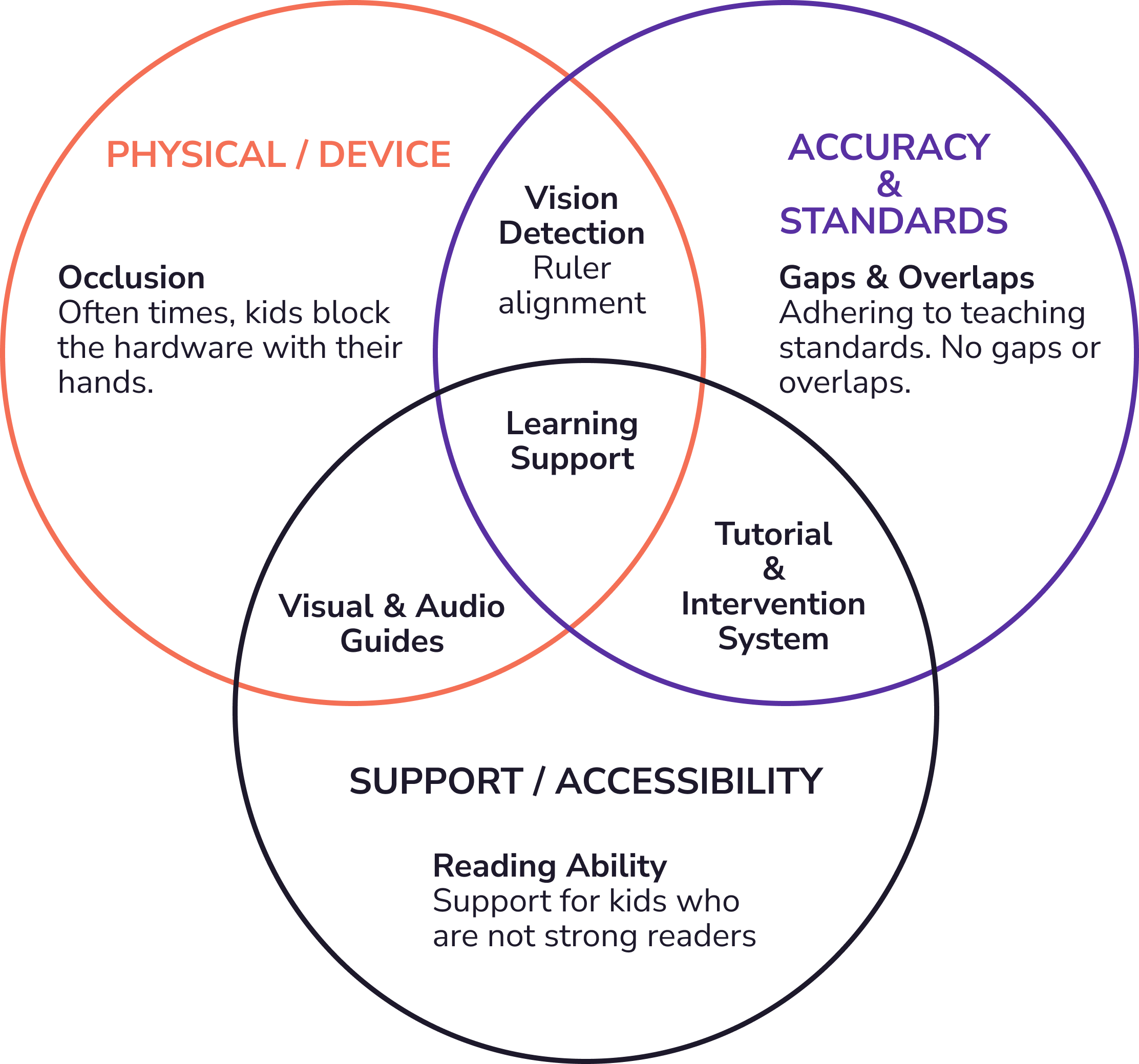
We learned kids sometimes needed help at the very beginning. The Math Wizard series is heavily supported with tutorials and intervention systems to help kids towards the correct solutions without giving them the answer. We wanted to create a supportive environment where kids have the freedom to explore and a safe space to make mistakes.
Exploration
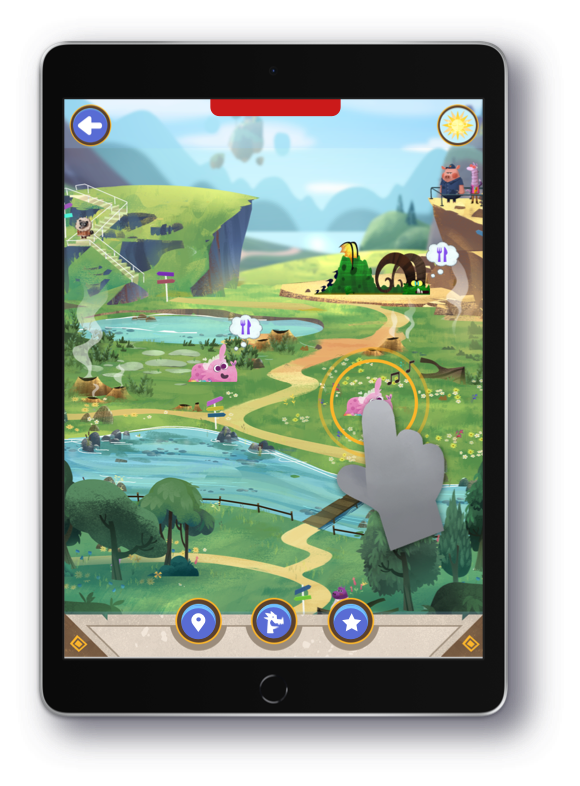
To create a engaging experience, we wrapped the learning concepts within a magical dragon world filled with immersive environments and delightful discoveries. This experience should not feel like school work.
Merit Badges
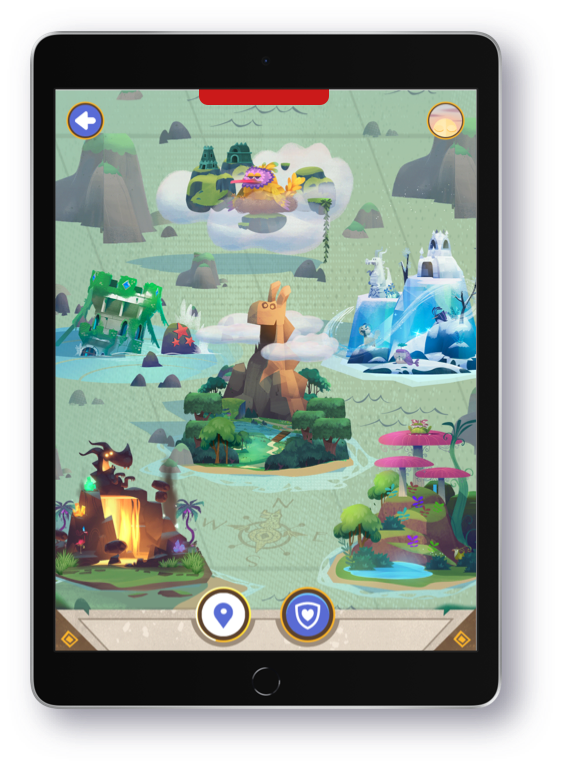
The collection feature encourages kids to complete the challenges and engage with the different features. It’s important for kids to learn through practice and repetition of the early math concepts.
During playtests, we discovered some kids were highly engaged with collection and were hyper focused on earning the next badge.

Measuring Intervention System
Using vision technology to detect a pointing finger was a new type of interaction that has never been done at Osmo. People are unique - they come in all shapes, sizes, and skin tones.
There was a lot of technical aspects, but working closely with Vision Engineers, I created a reactive intervention system where kids learn how to point and hold their finger on the page. We validated our designs through vision data and weekly tests with live users.

Estimation Intervention System
To cover the topic of estimation and comparison. We introduced a variety of comparison problems to cover different dragon food preferences. Dragons can consume foods that are about the width of their body. These intervention prompts solved the issue of the gaps and overlaps during early testing.

Difficulty
Added a math difficulty setting with parental control to include additional curriculum standards and the ability to cater to each individual child’s needs.

Global Launch
Setup with a warehouse supply of hardware boxes, a polished software build, and exciting marketing campaigns, we proceeded to launch globally on both the Osmo and Amazon websites.
Reviews
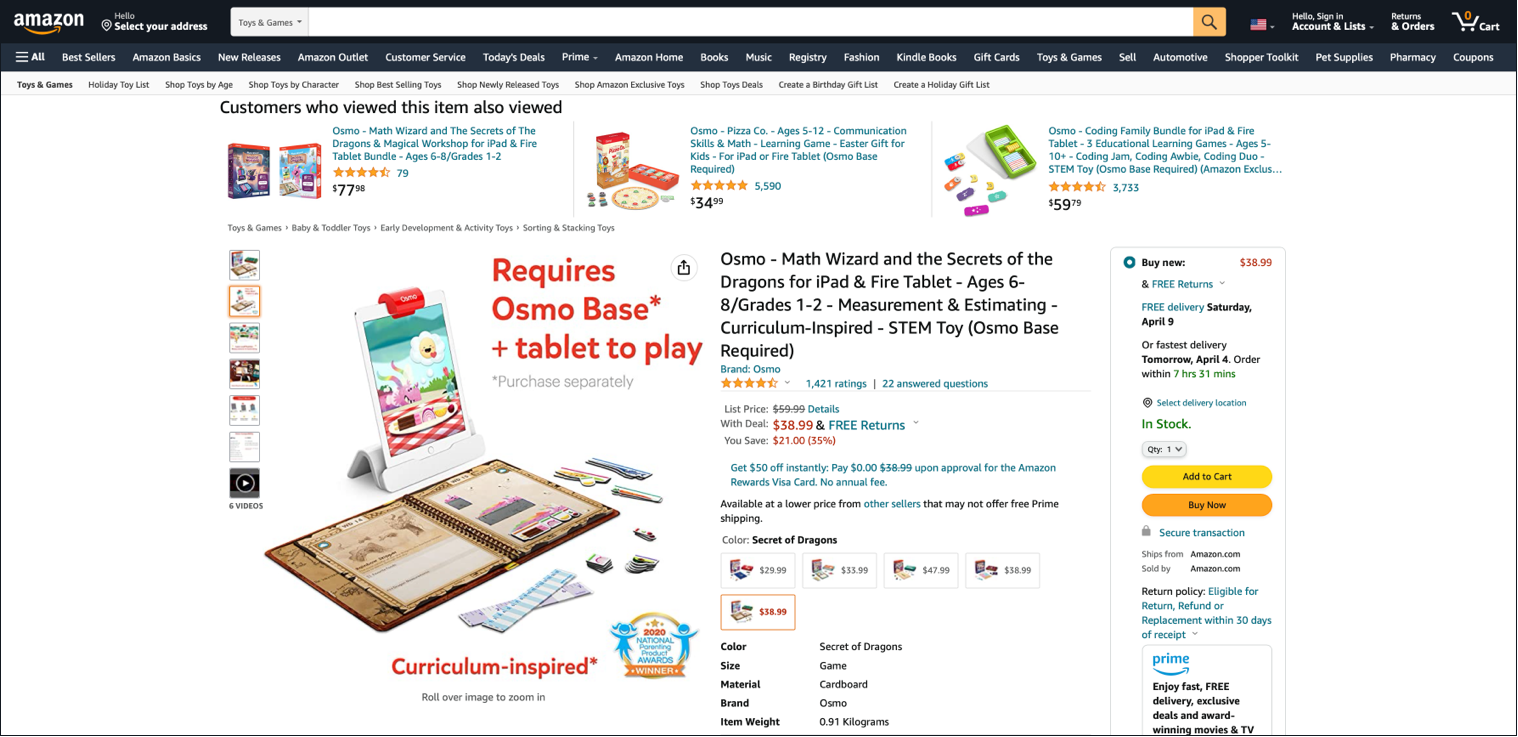
Customer reviews were overwhelmingly positive. I used the feedback to further refine the gameplay and address software related solutions that were called out.

Additional Boxes
The first two flagship Math Wizard titles were successful, so we decided to launch additional boxes to cover a wider range of subjects and common core standards.